

 DO YOU NEED TOP #1
Follow our Step by Step ranking guide !
Or create your custom SEO Plan !




- Affordable
- High Quality
- Fast Delivery
Backlinks from Blackhatlinks are the fastest way to rank your Website
Buy backlinks at affordable prices. Quick delivery times guaranteed!
Blackhatlinks.com is the most affordable safest quickest way to obtain top rankings.
The World’s Best SEO Backlink Service!
Trusted by over 27,100+ satisfied clients. We successfully delivered 432,092 orders.
Most Affordable Prices on the Market
Buy Backlinks & Social Signals - starting at €2 EUR
Very Detailed Excel Reports
Every order comes with a detailed white label report.
One Way Backlinks
Receive the full link juice with a one way link.
Up to 30% Member Discount
Top up your members' balance and receive up to 30% bonus.
100% Verified Live Links
Before we send you a report we ensure that all links are 100% live and working.
Free Unique Content
We create unique content related to your niche for free!
Free Link Indexing Submission
We submit your newly created backlinks to an indexing service for free!
Quick Order Delivery (less than 60 min)
Mostly, we deliver your order within an hour.
Are you ready to rank your website now?
Combine link building with social signals.
澳洲幸运10开奖官网开奖 Fastest order delivery times ever!
Due to 100% process automation!
Place your order
1-24h
Detailed Excel report incl. live URLs

Our Services
We offer high quality link building services for your website.
You can choose between various backlink packages and social signals.
Follow our proven step by step ranking guide or buy single backlink packages according to your specific needs.
Outsource your time-consuming backlink processes to a well-established backlink service to save time and money.
PBN
Private Blog Network Blog Post Backlinks from TF 25+ Domains & handwritten 500+ words content.
Social Signals
With Social Signals a new era of
SEO has begun!
100% Google penalty safe rankings.
Bookmarks
Add your website to different bookmark websites and extend your backlink portfolio.
Comments
High IP diversification by quality low obl comments.
Various packages available.
澳洲10官方开奖号码记录-澳洲十开奖直播结果,澳洲洲幸运10官方开奖结果查询-Blackhatlinks Exclusive SEO Planner
Super Easy Drag & Drop System
You will definitely love this tool.
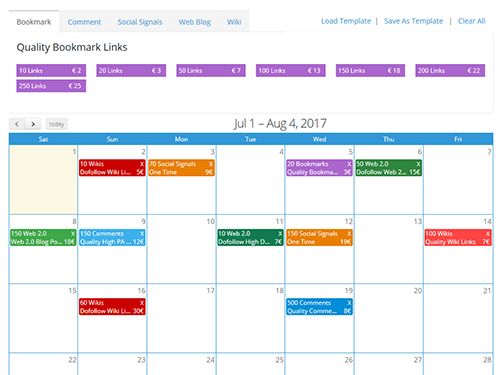
World's First SEO Planner with Drag & Drop
SEO has never been easier with this new and exclusive Blackhatlinks SEO Planner Tool.
Just drag and drop your favourite packages into the calendar and hit the order button!
No multiple order processes anymore! Buy backlinks with a click of a button!
Use the ability to save your SEO Plan as a template and reload your template for future orders. This will allow you, in future, to place orders in an easier and faster way than you've ever expected. Using templates allows you to achieve time savings of up to 90% in comparison to conventional SEO, thus saving you money.
It takes less than 60 seconds to load a template, fill your website details and click the order button
For illustration of all supported functionalities and easy usability please explore our Demo
No download necessary - It's web-based!
How it works
You can easily use the Drag & Drop system to fill the calendar with Social Signals, Web 2.0, Wiki, Bookmark or Comment Packages.
Fill the order detail box with your URL, keywords etc. and hit the order button.
It's that simple!
Create your first SEO Plan now!
New SEO Plan
Drag & Drop any packages into this calendar.
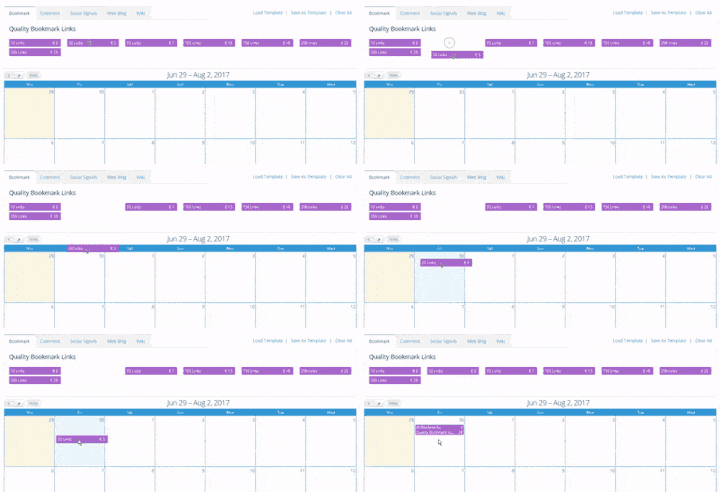
The SEO Planner will save you a lot of time and money!
Try our Demo to explore all features and functions!
SEO has never been easier! Be amazed by our unique Drag & Drop concept!
Proven Step by Step Ranking Guide
We found the perfect way to rank new sites.
Just follow these optimized and proven step by step instructions!
Completing this guide results in a magnificent ranking boost.
You can purchase the entire Ranking Guide with just one click.
Load the Ranking Guide Template into the SEO Planner.
Buy Ranking Guide as SEO Plan
Ranking Guide Price: € 545 EUR
| Day | Type | Package | Order |
|---|---|---|---|
| First Day: | 600 Monthly Social Signals | ||
| #1 Monday: | 25 Quality Web 2.0 Backlinks | ||
| #2 Tuesday: | 100 Dofollow Comment Backlinks | ||
| #3 Wednesday: | 30 Dofollow Wiki Backlinks | ||
| #4 Thursday: | 20 Quality Bookmark Backlinks | ||
| #5 Friday: | 35 Social Signals | ||
| #6 Saturday: | 100 Quality Comment Backlinks | ||
| #7 Sunday: | 50 Dofollow Web 2.0 Backlinks |
(Price: € 545 EUR)
| Day | Type | Package | Order |
|---|---|---|---|
| #8 Monday: | 50 Quality Bookmark Backlinks | ||
| #9 Tuesday: | 25 High PA Comment Backlinks | ||
| #10 Wednesday: | 100 Dofollow Web 2.0 Backlinks | ||
| #11 Thursday: | 150 Social Signals | ||
| #12 Friday: | 50 Dofollow High DA Web 2.0 Backlinks | ||
| #13 Saturday: | 25 High DA Web 2.0 Backlinks | ||
| #14 Sunday: | 100 Quality Wiki Backlinks |
(Price: € 545 EUR)
| Day | Type | Package | Order |
|---|---|---|---|
| #15 Monday: | 200 High DA Web 2.0 Backlinks | ||
| #16 Tuesday: | 200 Dofollow Wiki Backlinks | ||
| #17 Wednesday: | 300 Dofollow Web 2.0 Backlinks | ||
| #18 Thursday: | 500 Social Signals | ||
| #19 Friday: | 100 Quality Bookmark Backlinks | ||
| #20 Saturday: | 100 High PA Comment Backlinks | ||
| #21 Sunday: | 100 Dofollow High DA Web 2.0 Backlinks |
(Price: € 545 EUR)

Purchase the Ranking Guide with just one click!
Load the Ranking Guide Template into the SEO Planner.
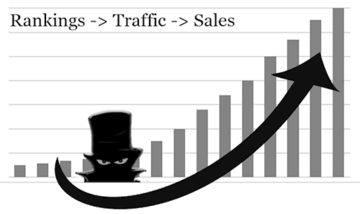
Buy Backlinks to increase your sales
With the help of Backlinks your website will gain top rankings.
The higher you rank in Google the more traffic you receive.
With huge targeted traffic your sales will explode.
Super Easy Order Process
With just a few clicks you can place an order.
Order Scheduling
Set the execution date for every single order to any future date.
澳洲幸运10开奖官网历史查询,澳洲10直播官网开奖历史168新地址,在线查询手机版视频-Blackhatlinks Special Features
Very Fast Order Delivery
Mostly, we deliver within a few hours.
Affordable Prices
Buy backlinks at the cheapest prices on the market.
100% Verified Live Backlinks
100% live backlinks with every order.
Free Indexing
100% crawling & an incredible 50% indexing rate by google.
Free Unique Content
All articles are unique and relevant.
Special Characters Supported
Full support of any language. Use Chinese, Arabic, Greek, etc. as keywords.
Low OBL Backlinks
Purchase backlinks with low external link count.
Order Scheduling
Set a execution date for your order.
Unlimited URLs/Keywords
Use as many URLs/Keywords as you like.
Very Detailed Reporting
Our Excel report includes URLs, anchors, MOZ metrics & many more.
One Way Backlinks
Get the full link juice with a one way link.
High Link Diversity
Diversification through numerous web platforms.
Ranking a website has never been easier!
Follow the Ranking Guide
Use our exclusive and proven Ranking Guide for your website!
Various Payment Services accepted
Blackhatlinks.com accepts payments from all major payment systems: PayPal, Credit Cards, Skrill, Payoneer, WeChat Pay, Alipay, Apple Pay, UnionPay, Cryptocurrencies (Bitcoin, Bitcoin Lightning, Ether, Solana, Tether USD, USD Coin, Litecoin) and many more!
Top up credits and get up to 30% bonus. All transactions are processed automatically (except Skrill and Payoneer).
You receive the credits in your member's balance in seconds, so you can start right away!
Stunning Reviews
Our main goal is to completly satisfy each and every customer. That is our huge advantage over our competitors.
By now we received 2871 positive reviews from totally satisfied customers.
What else could convince you more than other online marketers' feedback?
Don't waste money and time on an unrated service! Buy backlinks only from etablished companies!
Our 澳洲幸运10开奖官网开奖 Company
Blackhatlinks.com was founded 2011 by a team of well experienced internet marketers with the aim to invent a top notch and affordable SEO service. To achieve this goal the diligent team developed selfwritten software and rented dedicated servers.
Our team has got the expertise to modify the tools in order to comply with any market requirements and thus, ensure to deliver a quality service.
The entire process right from the first step of the order to the report is 100% automated. This enables us to serve you the fastest link building service ever. Get the most from our committed solutions as we would love to help you out with complete satisfactory results.
With more than 13 years in the business and 27145 satisfied customers who placed 432092 orders, Blackhatlinks.com became one of the most reliable and trusted source for backlinks and SEO services.
Contact Us!
General information about SEO / Backlinks / Link Building
Backlinks are usually texts that you click on to redirect you to another web page. These are effectively incoming backlinks from one website to the next and are also referred to as inward links, inbound links, incoming links or backlinks.
Backlinks are extremely important in search engine optimization (SEO) and search engine ranking. A backlink usually consists of two parts the URL and the anchor text.
Backlinks can either be text links or image links. A backlink performs two very specific functions.The link ensures that the linked website's reputation improves. Link popularity is a simple measure of link numbers and plays a main factor involved in search engine ranking. Google and other search engines examine anchor texts. If the anchor text is related to the topic of your website, then your site will achieve better rankings.
Backlinks are crucial for most websites because every time another web page links to your site, it gets a vote in googles eyes. This will move your website higher in the SERPs (Search Engine Result Pages). If you're adopting a search engine optimization strategy, then backlinks should be a vital part of it. Accumulating more backlinks will help you move up the rankings in search engines like Yahoo, Google and Bing.
It depends on the competition in your niche. I can go from 1 week to 6 months. Generally MOZ.com evaluates it with 10 weeks. See the MOZ.com article here:How Long Does Link Building Take to Influence Rankings?
Websites like majestic seo or ahrefs.com will help you to get an idea of how many backlinks your website has. Remember that these websites crawl the web using their own bots. This means that their search capability is limited, so they may only find 30 to 50 percent of your site's backlinks.
If you think you need only one type of link for your website, then think again! It's important to diversify your link building exercises because algorithms change often. Get links from as many link platforms as possible like
Web 2.0 (Drupal, Joomla, Elgg etc. )
Bookmarks (Pligg, Scuttle, Elgg, PhpDug etc. )
Wikis (MediaWiki, Wakka etc.)
Comments (Wordpress, Joomla, Buddypress etc.)
Social Signals (Facebook, Twitter, G+, LinkedIn, Reddit etc.).
Backlink diversity means that you should have different sources that link back to your website. This makes it look more natural and organic to search engines. Services like link pyramids and link wheels come in handy in these cases. Tiered backlinking can help you to draw more power to your backlinks. If your link building strategy involves links redirecting to your money site, then you can purchase highly respected backlinks like Web 2.0, Wikis, Bookmarks, Comments, Socials Signals, GOV and EDU links. They are able to pass a great deal of link juice to your website without risking penalties.
You can certainly buy all types of backlinks. But there is no fixed price, so some backlinks cost more than others. This compels you to spend a significant amount of time scoping out economical backlink solutions. Finding economical solutions also requires you to consider purchasing quality backlinks instead of buying harmful links. We can help you by providing internet marketing solutions and quality link building services at a fraction of the cost of other firms.
Many inexperienced webmasters either leave their websites with no backlinks or take matters into their own hands. If you are a novice, then this SEO strategy could do more harm than good for your business and ruins your chances of listing on the first page of Google, Yahoo and Bing. It's always best to rely on professionals like us that do this for a living.
Pagerank: Google's Pagerank is an algorithm that analyzes backlinks to establish the importance of different websites. All websites have a Google Pagerank between 0 and 10 where 10 is the best. Pagerank 10 domains include Twitter.com, Whitehouse.gov and USA.gov. All have the highest numbers of backlinks compared to any other website. Google.com and Facebook.com have a Pagerank of 9. The smaller the number of backlinks the smaller the Pagerank is. Brand new websites with no inbound links start at Pagerank 0. But by now google does not update the Pagerank anymore so it is outdated. We now use the MOZ Metrics as a direct replacement.
MOZ Metrics: The MOZ Metrics contains the Domain Authority (DA) and the Page Authority (PA).
Both values can range from 1 to 100. If you divide the value by 10 you got the equal value to Google PageRank. Means when a website has a Domain Authority of 60 it would be a Pagerank of 6 in old Google Pagerank system.
The Domain Authority shows the power of a Domain and the Page Authority show the power of a inner Page,
Other rarely similar values are
- Ahrefs.com: Domain Rating and URL Rating
- Majestic.com: Trust Flow (TF) and Citation Flow (CF)
- Moz.com: Domain Authority (DA) and Page Authority (PA).
If a website with a Pagerank of 5 or 6 or MOZ DA/PA of 50-60 links to your website, then Google regards it as far more valuable than a website with a Pagerank of 0 or 1 / Moz DA/PA of 1-10. Google essentially feels that if a higher Pagerank or higher Moz DA/PA website links to your website, then there must be valuable information in it and will push it up the rankings.
Example: To get a PR of 3 you would need approx 500 PR1 backlinks OR 3 PR4 backlinks. Same with the Moz Metrics.
When a site links to your website, Google considers this as a vote or an endorsement of your web page. Google considers all these link votes and draws its own conclusions about the significance of your web page. This is the rationale behind the Pagerank concept. When an external website links to your website or when you internally link from one page to another on your website , your page is given Pagerank points. This is known as link juice transfer.
The link juice amount is dependent on two factors:
- Pagerank of the link giving website.
- The total number of outbound links (OBL=OutBound Links) on the link giving website.
Example: If you get a link from a site with Pagerank 5 and the site have 10 external links. Means that the website links to your site and to 9 other sites. Now the link juice is spread between these 10 external links and you get only 1/10 of the Pagerank 5 juice. So the lower the external link count (OBL) the more link juice you will receive.
Nofollow
Nofollow links don't allow their links to be followed by search engine bots. This means that if a web page owner is linking back to you with a nofollow link, then it will not pass through link juice. Only people will be able to follow these links.
Important Notice: Recently Google announced that they would count nofollow backlinks as outgoing links in terms of distribution of your website's Pagerank.
A nofollow link becomes nofollow when you add the rel="nofollow" tag to the linking HTML code
Example of Nofollow Link:
<a href="http://www.google.com/" rel="nofollow">Google</a>
Dofollow
On the other hand, dofollow backlinks enable all search engines to follow them for reaching a website, giving you more link juice by providing you with a backlink. If a website owner links back to you with a dofollow link, search engines and people will be allowed to follow the link. The best dofollow link is a backlink where it is allowed to place a keyword as your anchor text. Means, when you get a high PR dofollow backlink, you should use specific keywords as your anchor text to gain a push in rankings.
Example of Dofollow Link:
<a href="http://www.google.com/">Google</a>
Note: By default all the hyperlinks are dofollow. So, you don’t need to do anything to make a link do-follow.
Social media offers opportunities for acquiring social mentions and backlinks to your web page. These perfectly tied in with your website's social media campaigns. Social media campaigns have now become extremely popular and they are increasing on the Internet, complementing SEO campaigns perfectly.
Using social media presents a unique opportunity to build advocates around your product and to build trust in your website. You can use social signals for your link building campaign. This means that if your site goes viral , many other websites will report about your site/topic/product/blog post and will link back to it.
Google knows that if a website gets a ton of hits and social signals, it is a legitimate site and can collect plenty of backlinks at this. When you know this fact, you can easily build backlinks and social signals for your website at the same time. The social signals will justify your link building efforts. This can help avoiding a google penalty while building a lot of links at the same time.
When it comes to SEO, On -page optimization refers to specific factors that will have an impact on the ranking of your web page. These may either be controlled by you or by the coding of your web page. On-page optimization examples include HTML code, keyword placement, meta tags, keyword density and much more. On-page SEO means that you can apply certain website settings to make sure it is optimized for search engines.
Here are some on -page SEO tips to help you:
- Content must be high quality and constantly fresh.
- URL structures must be proper.
- Descriptions and titles must be optimized.
- Websites navigation must be user-friendly.
- Internal links need to be optimized.
- Text must be properly formatted with proper font sizes like h1,h2,bold.
- Personal 404 error pages or correct forward in case of 404 not found error.
- Pages must be quick to load and user-friendly.
- Images should be properly optimized for a website and include the alt tag.
- Web pages should have Google Authorship verification.
- Links to external sites must be unbroken and helpful to the user.
Load time: https://gtmetrix.com/
On-page analysis: http://seorch.eu/
On-page analysis: https://seositecheckup.com/
Google Insights: https://developers.google.com/speed/pagespeed/insights/
Different from On-page SEO, Off-page SEO relies on activities conducted outside web page boundaries.
This includes :- Link Building
- Social Media
- Social Bookmarking